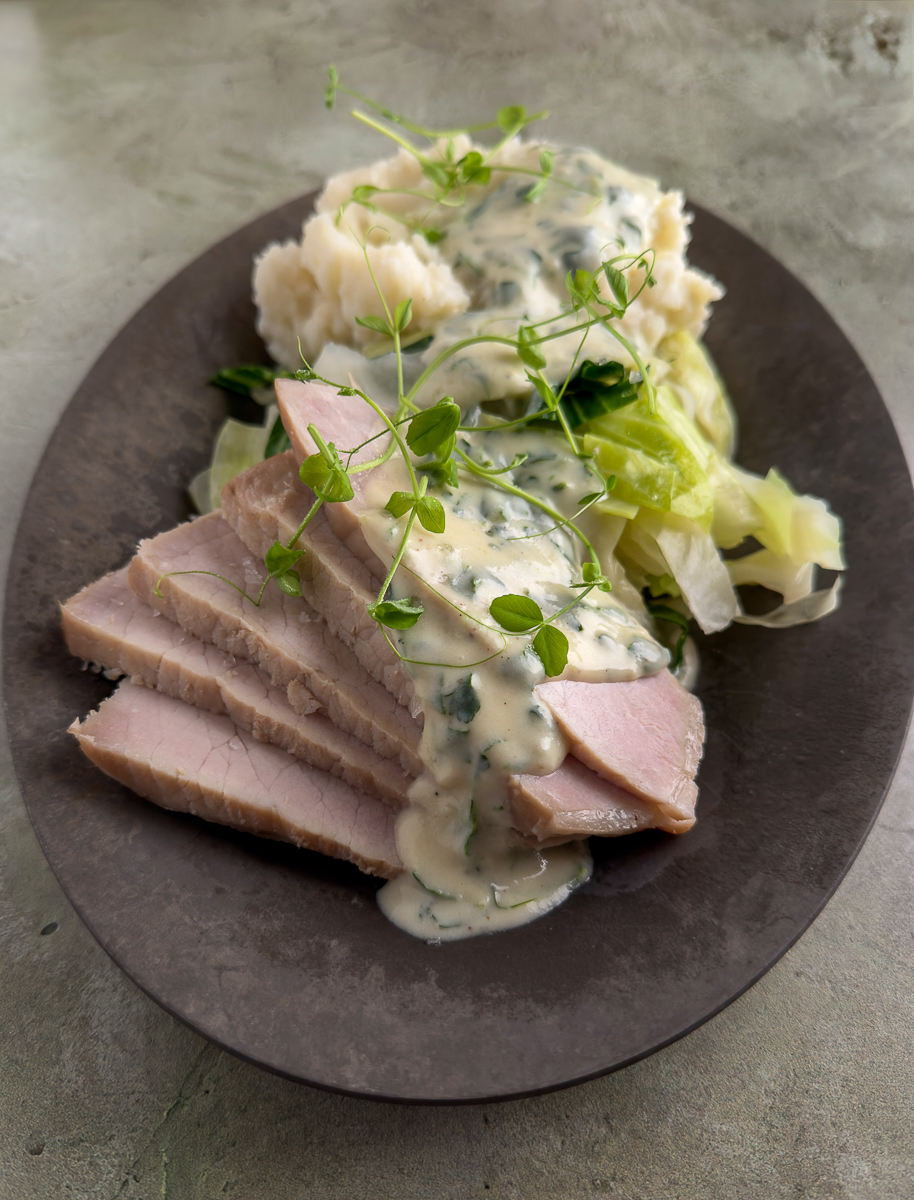
The original Corned Beef & Cabbage
Bacon and Cabbage is the meal the Irish eat on St. Patrick’s Day. This is it, it’s not the other typical American dish we are all used to. When so many Irish immigrated to the States, they lived alongside other ethnic communities, such as Italians, Jews, Germans, and others, because they were all immigrants. Corned beef was available at Jewish delis, and that’s what they used as a substitute for the bacon.
Ireland was ruled by the English for over 700 years. According to The Irish Cookbook, written by J.P. McMahon*, Ireland was essentially an extended pasture for England from the 1600s onward. Tenants of the land weren’t able to eat much beef because all the good beef stock was served to the landlords, and the rest was exported abroad. The landlords got the good stuff. Even in good times, the Irish tenants were lucky if they had one cow, which was mostly reserved for dairy, until, well, they got too old.

We met this big fella on a homestead farm tour in County Galway; and he was hard at work.
In comes the humble pig, referred to as ‘the gentleman who pays the rent’. Vital to the financial situation of a family in rural Ireland, and if the family were fortunate, they’d be able to keep one for financial security. Often, the pig would live alongside a family in their one-room cabin (to keep it warm and safe). The pig would be used for special occasions. Hearty cabbage and potatoes grew in abundance during non-famine times.
The ‘bacon’, as they call it, is nothing like our bacon here. The Irish (and the Brits) call our bacon ‘streaky bacon’. Irish bacon is cured; the closest thing available when they emigrated was corned beef. You can purchase the same cut as they use in Ireland at Moloney’s in St. Paul. I’m sure other cities with a large Irish diaspora will carry it too. OR you can make your own. I think I’ve really cracked the code on making Irish Bacon and Cabbage with readily available cuts of pork here in the Midwest.
Be sure to plan ahead so you have time to cure the pork. Enjoy this every Paddy’s Day and Lá Fhéile Pádraig sona duit (Happy St. Patrick’s Day!)
*Jp McMahon is a Michelin-starred chef, restaurateur, author, and artist in Galway City, County Galway.
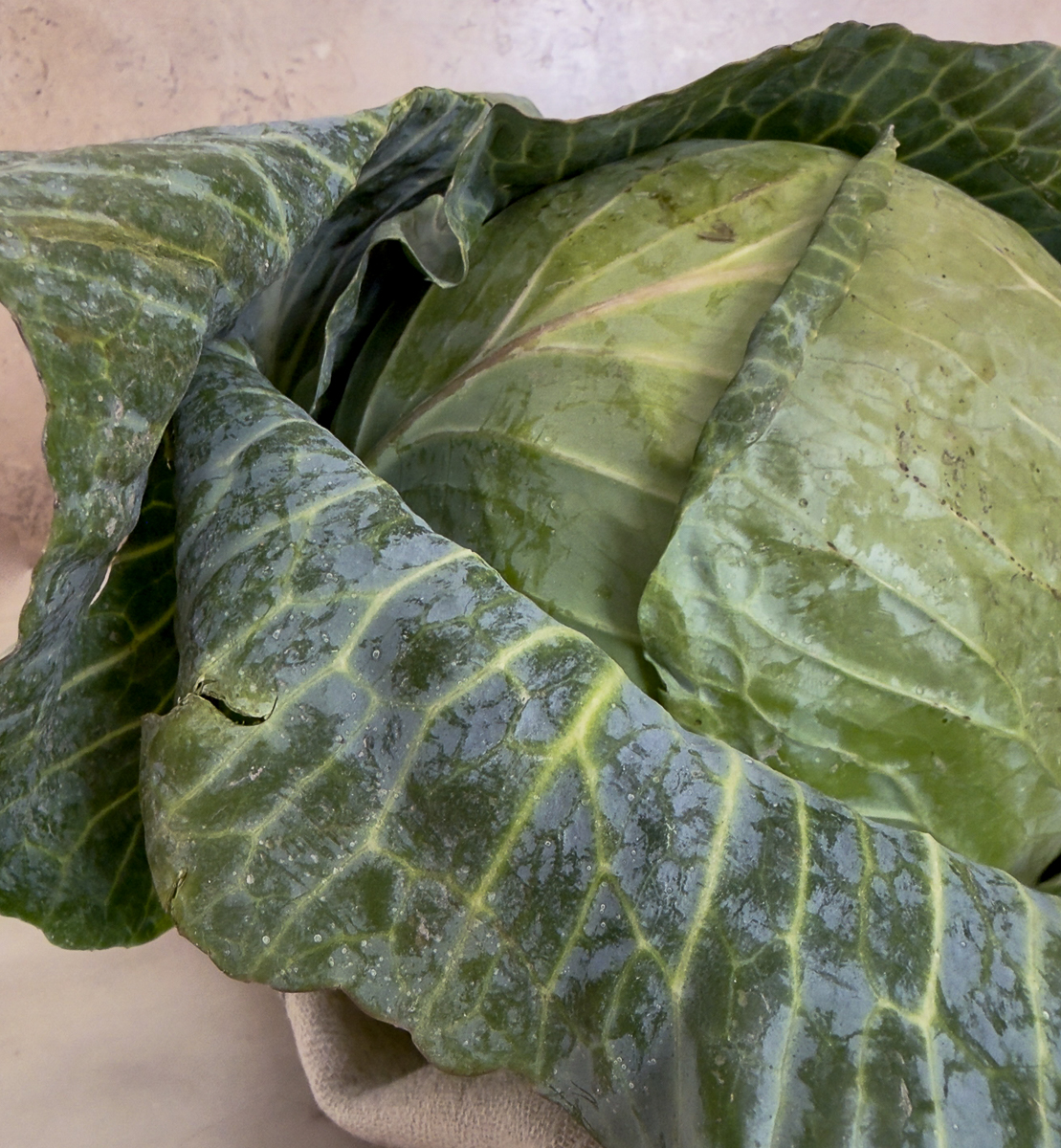
Be sure to make a good mash, or serve with loads of Colcannon. An alternative to boiling the cabbage is to roast it; it’s honestly my favorite way to enjoy cabbage! Here’s an easy-peasy recipe for Roasted Cabbage. It’s great on the grill too!
“It’s better to pay the butcher than the doctor.”
– A (wise) Irish saying about the value of good, real food
Bacon and Cabbage
- Prep Time: 30 minutes
- Cook Time: 1 1/2-2 hours
- Total Time: 3-5 days
- Yield: 6-8 1x
- Category: Dinner, Main course
- Method: Boiling
- Cuisine: Irish
Description
This is the real deal. Of course we all grew up on Corned Beef and Cabbage, but this is what the Irish (most of them anyway) eat on Paddy’s Day!
Ingredients
For the brine:
- 1 gallon water, divided
- 1 cup kosher salt
- 1 cup brown sugar
- 4 bay leaves
- 3 medium cloves garlic, smashed
- 1 tablespoon black peppercorns
- 1 boneless pork loin, or pork shoulder, trimmed of excess fat (about 4–5 lbs.)
- 1 head cabbage, rinsed, cored and sliced 1″ thick, crosswise
For the Parsley Sauce:
- 2 cups milk
- 4 tablespoons butter
- 4 tablespoons all-purpose flour
- 1/2 cup ham, or chicken stock (if needed to thin the sauce)
- Small handful of parsley, leaves picked and chopped
- Kosher salt to taste
Instructions
Brine the pork:
Combine 1 quart of water, kosher salt, brown sugar, bay leaves, garlic, and peppercorns in a medium saucepan. Bring to a boil over high heat, stirring to dissolve salt and sugar. Boil for 1 minute, then remove from heat. Transfer to a large container and stir in the remaining 3 quarts of water (+1 quart of ice, to cool it quickly). Place in refrigerator until completely chilled. Fully submerge the pork loin in the cure and let it sit in the refrigerator for 3 to 5 days.
Remove pork from the brine and place it in a heavy pot. Cover with water, bring to a boil, and reduce to a low boil/simmer. Pork loin: 1 hour or until 140°, Pork shoulder: 1½–2½ hours until tender 160°. Remove and set aside.
Cook the cabbage:
Return the water to a low boil, then add the cabbage. Simmer for 15 minutes until tender (don’t overcook it!). Serve with the pork, colcannon, and parsley sauce.
Make the Parsley Sauce:
Melt the butter in a medium saucepan over low heat. Stir in the flour. Cook for 2 minutes to form a paste. Gradually add the milk while whisking to avoid lumps.
Bring to a simmer and cook for 5-10 minutes until thickened. Whisk in the stock if needed.
Add the parsley and season to taste with sea salt.
Notes
Parsley sauce is a traditional accompaniment for bacon and cabbage. Essentially, it is a béchamel (white) sauce with chopped parsley.
If you like, add a chopped carrot and half an onion to the simmering pot of pork.



Leave a Reply