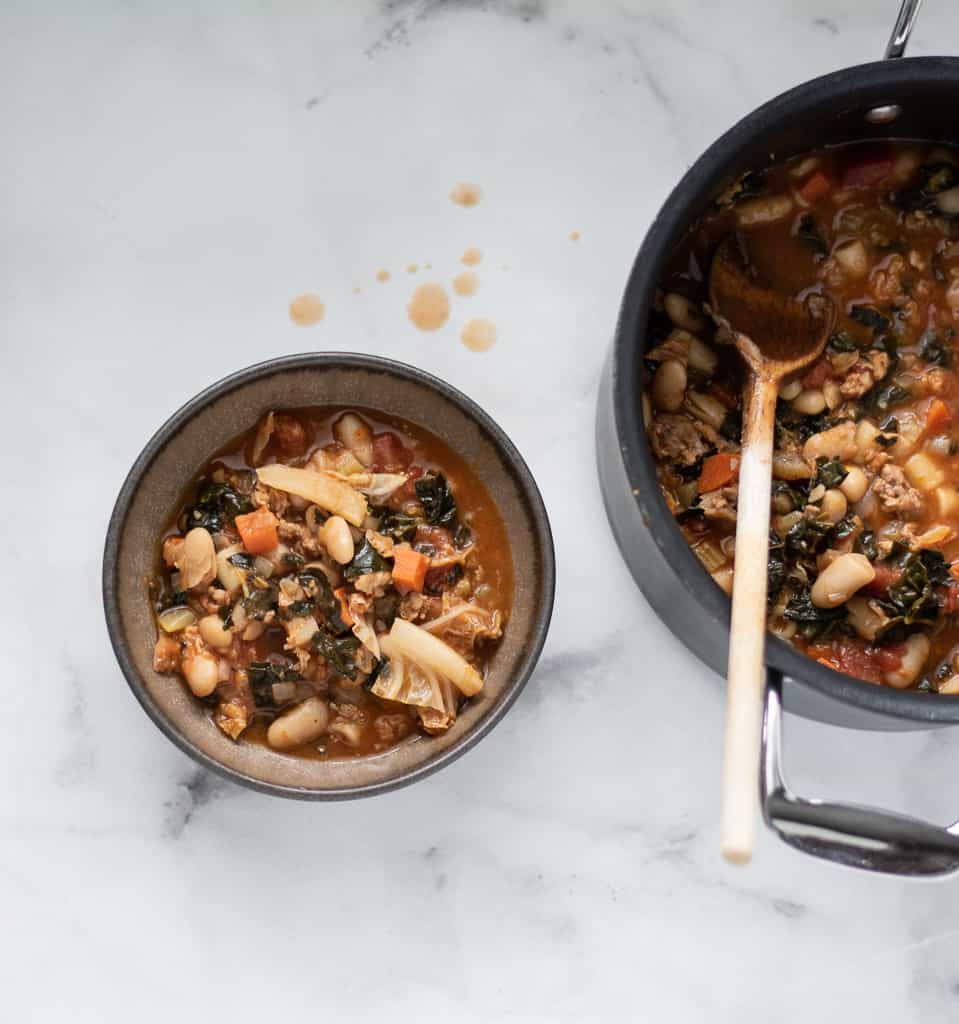
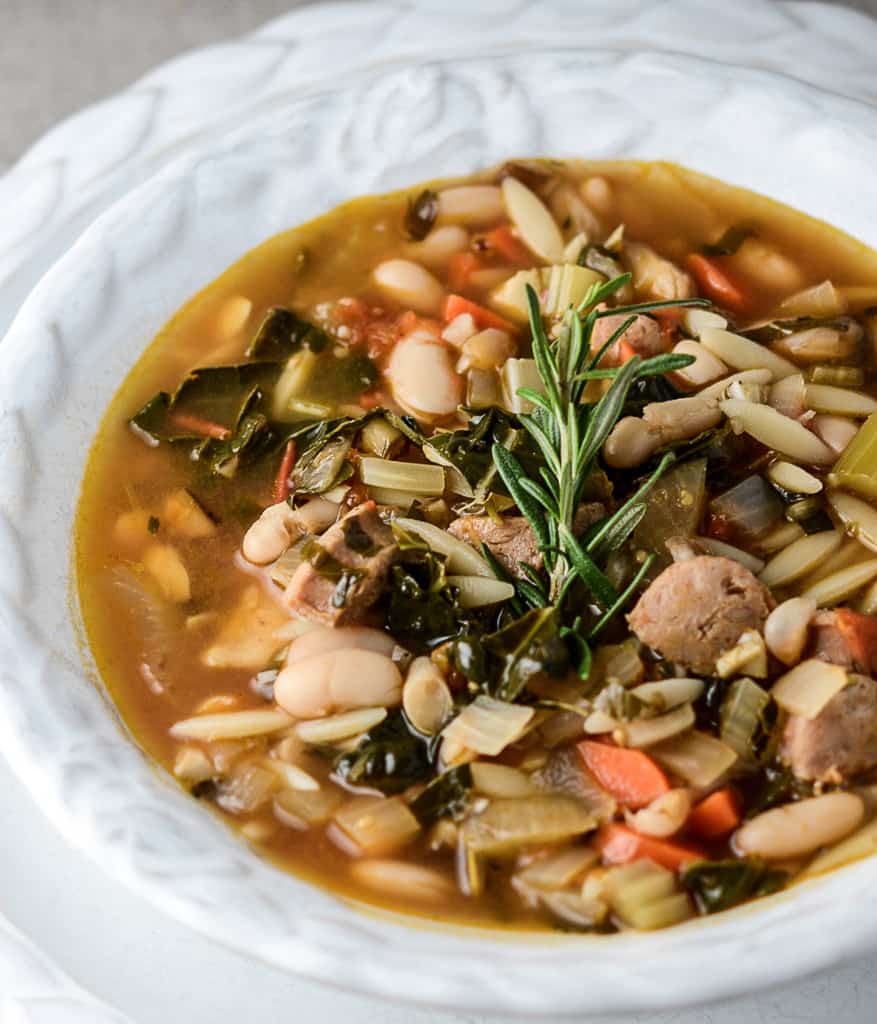
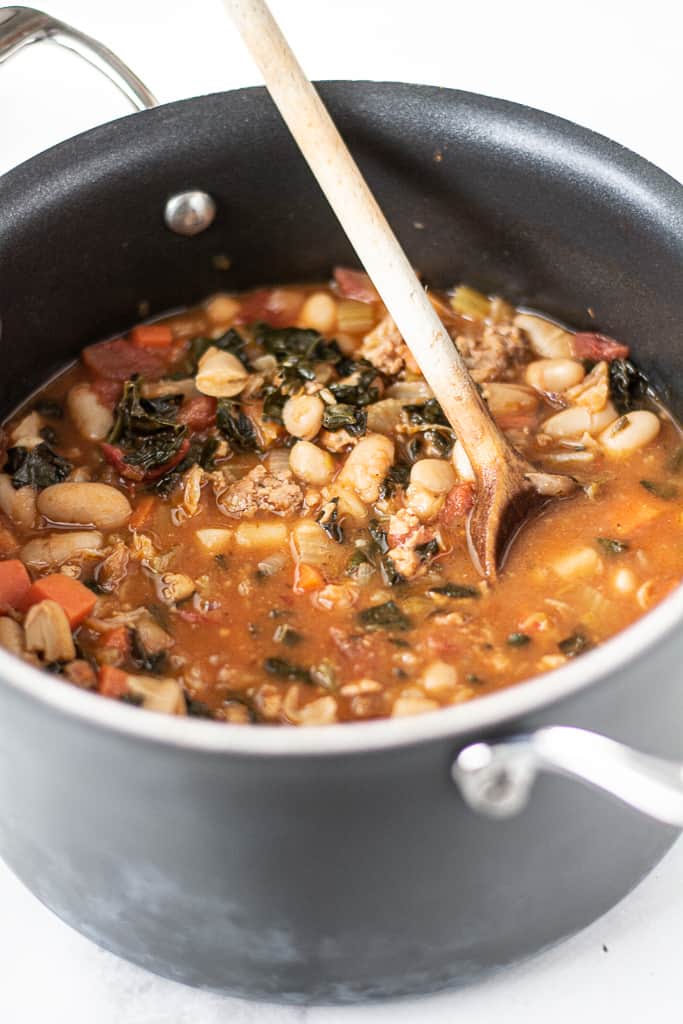
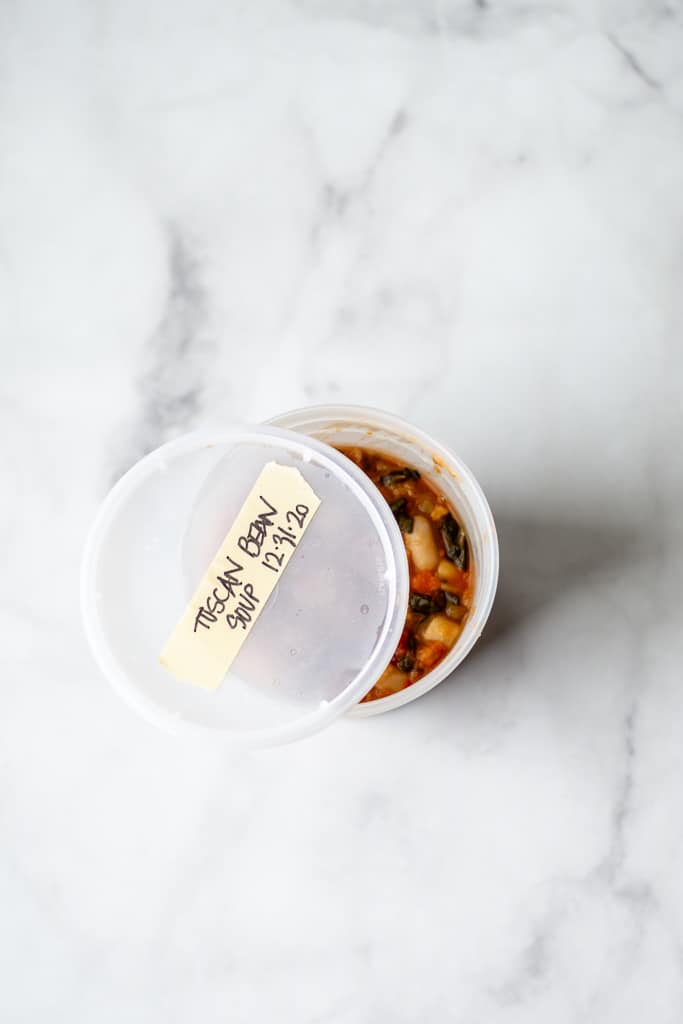
January 2021, the month of soup. It’s officially been declared, by me. We will start with this luscious, healthy (hate that word), yet flavor-rich, Tuscan Bean Soup. I crave it, and I bet you will too.
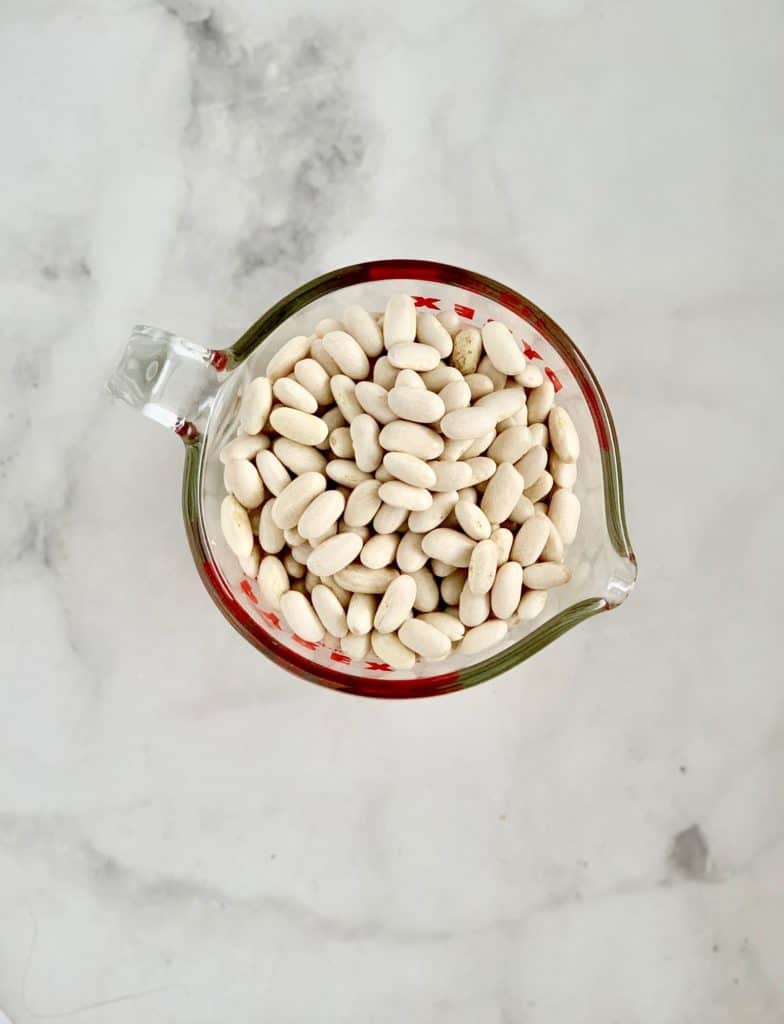
This soup recipe uses dried cannellini beans, but feel free to sub-out canned beans, they are great in a pinch. The awesome thing about using dried beans (for any dish) is you get to control the sodium and all the ingredients. If you can’t find dried cannelini beans, use Great Northern, they are a perfect sub.
Dried beans (in general) soak up any flavor you give them and are great sources of protein
How to use dried beans:
Use this method for just about any recipe where dried beans are needed, feel free to add other aromatics (carrots, onion, garlic or other herbs and spices)
Soak 2 cups of dried cannellini beans overnight in cold water.
When ready to cook, drain the soaking water, place in a pot large enough for the beans to be covered with about 1 inch of water, add 1/2 teaspoon kosher salt and a bay leaf. Cover and bring to a boil.
Immediately reduce to a simmer and cook until very tender (about 45 minutes to an hour). Add more water if needed, stir occasionally.
Use in the recipe as directed.
Why use dried beans?
if save the cooking ‘liquor’, it adds body and flavor to the dish (or soup in this case).
dried beans have better texture (not as mushy) as canned
less expensive than canned
extra bonus: you get to sing the song! Beans, beans, the magical fruit…
Soup swaps
use turkey sausage (preferably dark meat), instead of pork
use canned beans for dried
use dried rosemary for fresh, but use less!
Grano Padano is a less-expensive variety of Italian cheese for the genuine Parmesaino, it too packs a lot of flavor
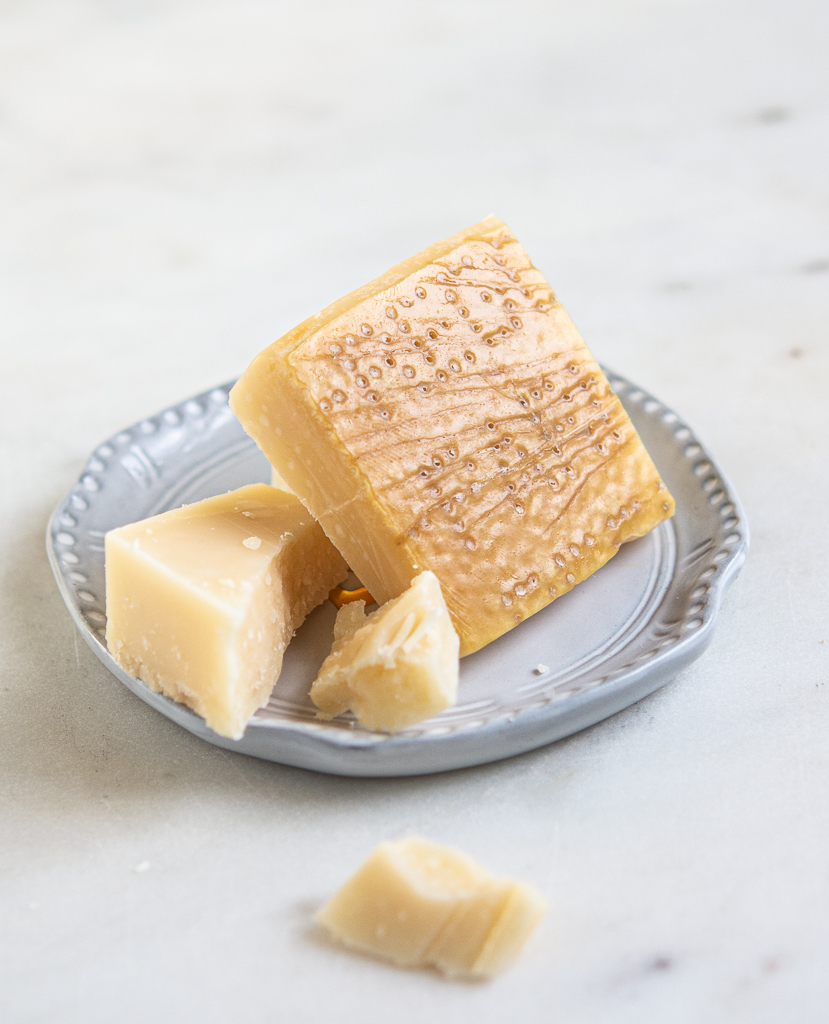
What’s all this about Parmesan rind?
Look for the official stamp on the rind for genuine Parmigiano-Reggiano, and save that rind!
This tip is a game changer. There are some ingredients well worth splurging on, and for me, it’s good olive oil and Parmesan cheese. Hopefully you buy and use whole chunks, and grate or grind as needed. There really is no comparison to the pre-grated (don’t get me started on the junk they add to keep it from clumping…:) stuff bought in a plastic bag.
Tips for grating your Parm
toss it in the food processor, grind up to the desired consistency
tightly wrap your whole Parmigiano-Reggiano in a wax-coated food safe wrap. It will keep for weeks, if not a month
note that when a recipe calls for Parmesan (or any other cheese) by volume, it all depends on how it’s grated. Grinding in the food processor will give you a weightier result, whereas using a Microplane grater will be much lighter and fluffier. Use your best judgment.
best tip of all: add the rind to any Mediterranean flavor soup or sauce and it will transform it. It acts like a seasoning adding tons of umami (flavor inducing happiness in your mouth!)
3cups (about) chicken stock, you may want more, you may want less
1 or 2Parmesan rinds*
Kosher salt and fresh cracked pepper, to taste
1/4cupParmesan cheese for serving
Instructions
Heat a large, heavy-bottomed pot or dutch oven (with a lid) on medium-high heat. Add the olive oil and sausage, brown for a few minutes, add the leek, onion, carrot, celery, kale, garlic, and chili flakes, and saute, stirring often until the onion has turned color (about ten minutes, depending on the heat)
Add the tomatoes, kale, cabbage, and beans, more olive oil if you wish, and stir well to mix the ingredients.
Mix in the rosemary, oregano, kosher salt, and black pepper to taste. Add enough chicken stock to cover the ingredients by about ¼ inch.
Add 1 or 2 Parmesan rinds* if you have them. Bring to a very slow simmer, covered, for about ½ hour.
Sprinkle with Parmesan cheese.
Notes
*Tip of the day: Save the rinds from your chunks of Parmesan, (keep in the freezer until ready to use) then throw them into your soups to add amazing flavor. You can also use them in tomato sauces, or when you are simmering a homemade soup stock. Best tip yet!
Want great recipes?
I don't send out many,
but well worth it when I do.